How Claude is Transforming Creative Work
Discover how Claude's new connectors with Adobe, Autodesk, Blender, and Ableton are automating tasks and empowering creative professionals.

Creative professionals continually look to technology to expand what's possible in their work. While AI cannot replace taste or imagination, it serves as a powerful catalyst to open up entirely new ways of working. From faster, more ambitious ideation to expanding a creator's skill set, AI empowers creatives to take on larger-scale projects and push the boundaries of their craft.
One of the most significant barriers in the creative process is the manual toil and repetitive tasks that consume valuable time. By taking over these aspects of production, AI allows artists, designers, and engineers to focus on what they do best: creating. A key part of realizing this potential involves integrating AI directly into the tools the creative industry already knows and trusts.
Recently, new connectors have been introduced that allow Claude to work alongside industry-leading software. These integrations let creatives interact naturally with complex software, automating tasks and extending their capabilities without needing specialized coding knowledge.
Connecting Claude to IndustryStandard Creative Tools
The introduction of Claude connectors means that AI can now directly interface with a host of powerful creative platforms. These connectors ground Claude’s answers in product documentation, automate repetitive workflows, and even generate custom scripts.
1. Adobe Creative Cloud
The Adobe for Creativity connector enables users to bring images, videos, and designs to life. Drawing from over 50 tools across the Creative Cloud apps—including Photoshop, Premiere, and Express—Claude can assist in complex workflows, helping users navigate multiple applications simultaneously for a seamless production experience.
2. Autodesk Fusion and SketchUp
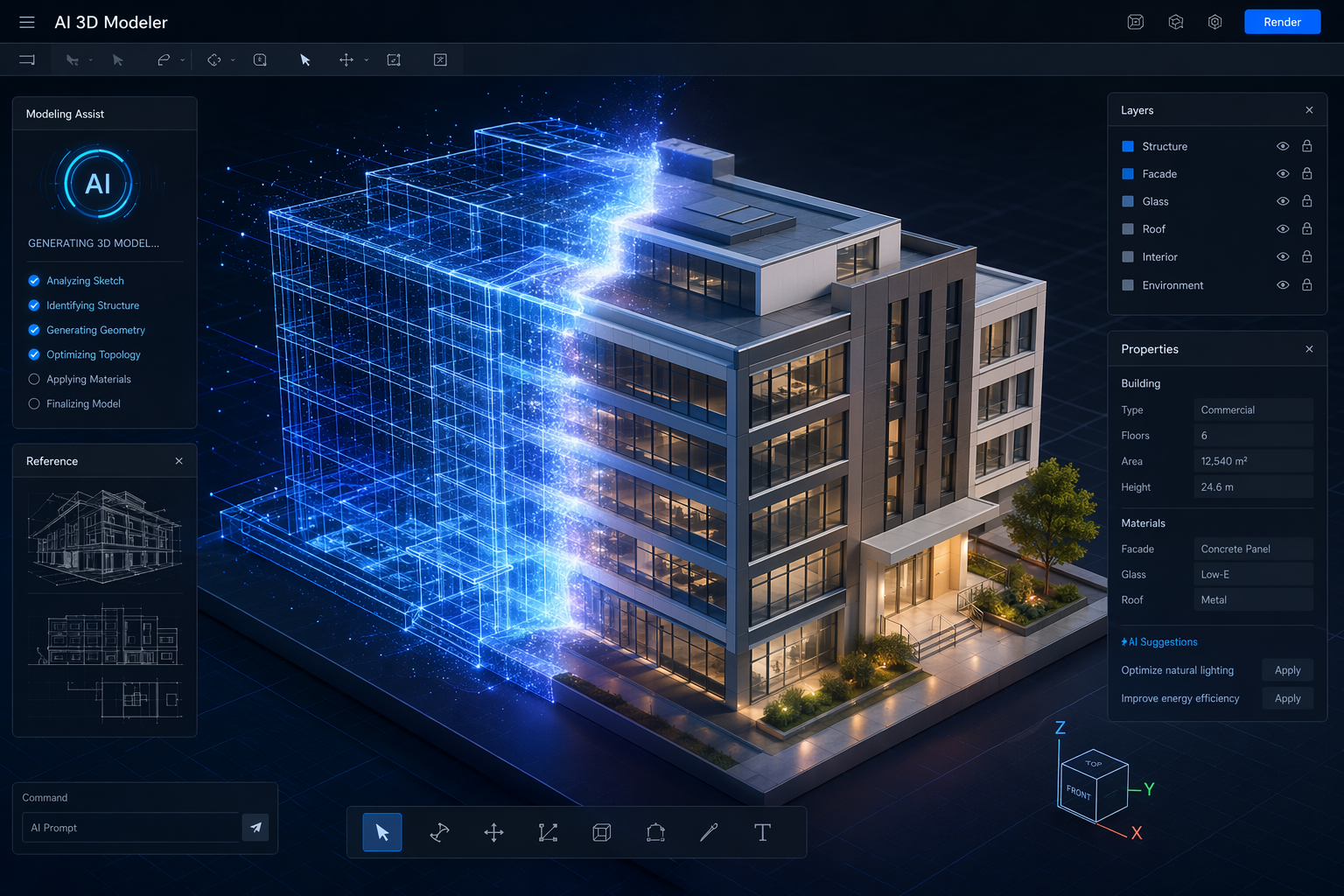
For 3D designers and engineers, tools like Autodesk Fusion and SketchUp stand to benefit massively from natural language integration. A user can start a conversation with Claude to describe a room, a piece of furniture, or a site concept, which is then translated into a starting point for 3D modeling. With Autodesk Fusion, users with subscriptions can create and modify 3D models through conversation, bridging the gap between ideation and concrete design.
3. Blender's Python API
Blender, the free, open-source 3D creation suite, has received an official MCP connector. 3D artists can use this connector to analyze and debug entire scenes or build custom scripts to batch-apply changes to multiple objects at once. By providing a natural-language interface to Blender's Python API, Claude can add new tools directly to the Blender interface, making scene management far more efficient.
4. Audio and Live Graphics
In the realm of audio and live visuals, Claude's integration with Ableton, Splice, and Resolume marks a massive shift. The Ableton connector grounds Claude's answers in official product documentation for Live and Push. Splice integration allows music producers to search a vast catalog of royalty-free samples straight from Claude. For VJs and live visual artists, connectors for Resolume Arena and Wire allow natural language control in real-time, greatly enhancing live performances and AV productions.
Practical Uses for Claude in Creative Work
With these integrations, how will a typical creative workflow change? Here are a few core ways Claude is already being utilized by creative professionals:
Learning and Mastering Complex Tools
Complex software often has a steep learning curve. Claude can act as an on-demand tutor, explaining modifier stacks, walking users through synthesis techniques, or demonstrating entirely new features.
Extending Tools with Code
For creators who want custom functionality but aren't programmers, Claude Code can write scripts, plugins, and generative systems. Whether it's building a custom shader, scripting a procedural animation, or generating parametric models, Claude can produce documented code that is ready to use and modify.
Automating Repetitive Production Work
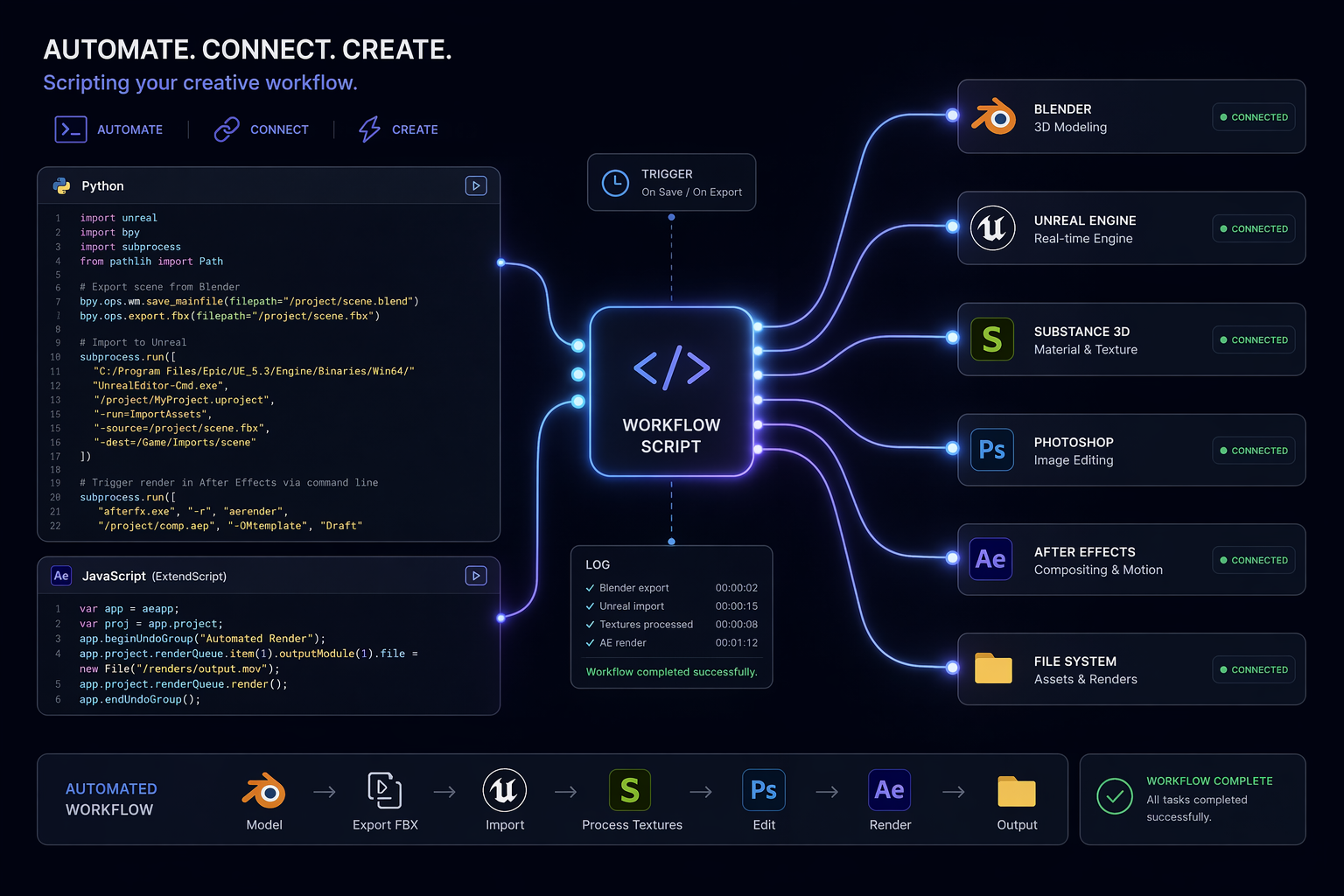
Production workflows are often bogged down by multi-step tasks like batch-processing assets, setting up project scaffolding, or applying procedural changes across a scene. Claude handles this busywork, allowing the creator to maintain momentum and focus on larger creative decisions.
Bridging Tools in a Pipeline
Workflows rarely stay within a single application. A project might span design, 3D, and audio tools. Claude can translate formats, restructure data, and keep assets in sync across these applications, eliminating manual handoffs and ensuring a smoother pipeline.
The Future of Creative Computation
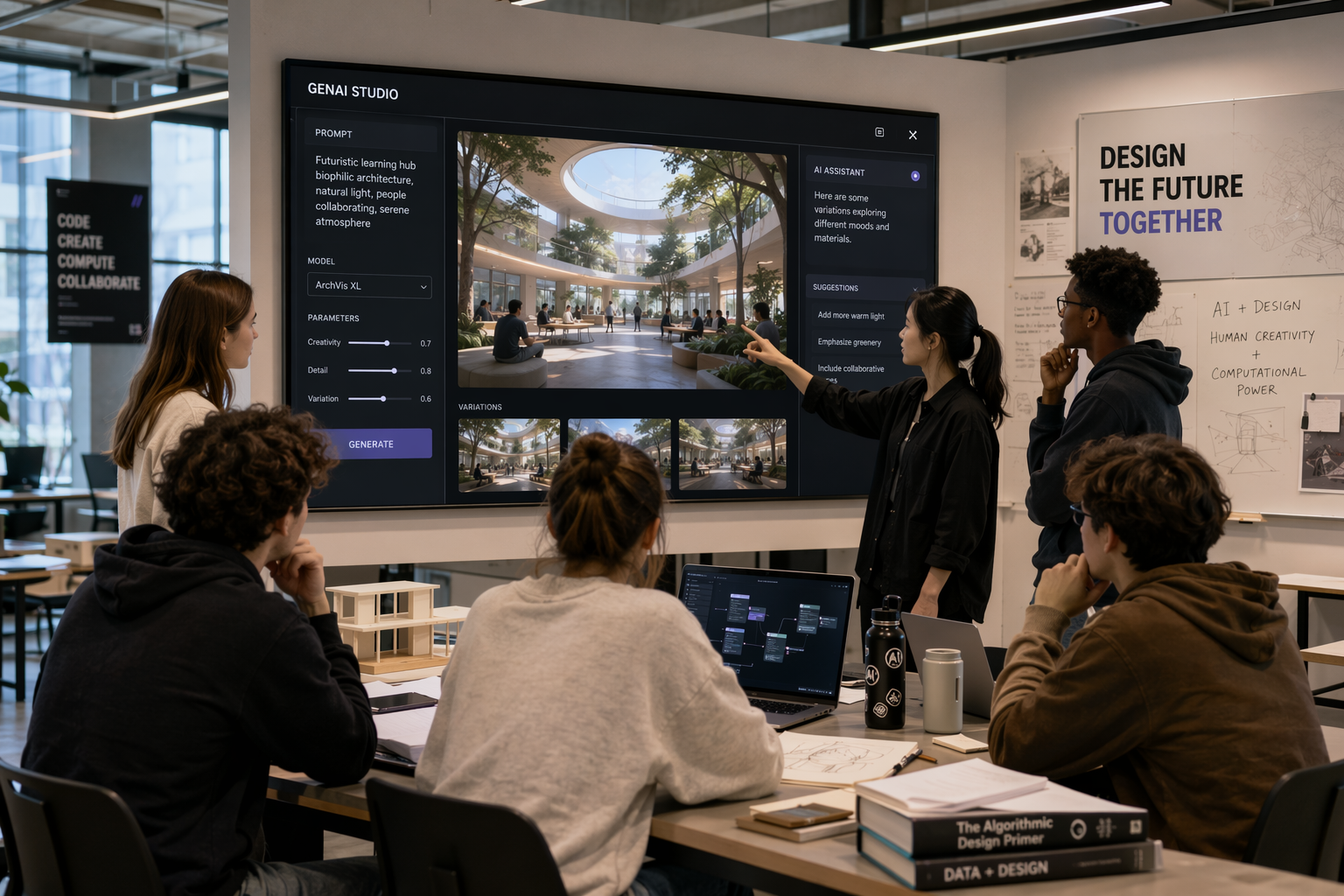
Anthropic is working with art and design programs to support curricula involving creative computation. Programs at the Rhode Island School of Design, Ringling College of Art and Design, and Goldsmiths, University of London will provide students and faculty with access to Claude and its new connectors. This collaboration ensures that the next generation of creative practitioners will learn to integrate AI holistically into their methodologies, while their feedback will shape the future capabilities of these tools.
Ultimately, Claude is not here to replace the human element of creativity, but to amplify it. By removing the friction of complex interfaces and automating tedious tasks, AI empowers creators to focus entirely on their vision. As these connectors continue to evolve seamlessly via the open Model Context Protocol (MCP), the interoperability of creative software will only increase, ushering in a new era of unhindered creative expression.