From Data Overload to ICP-Fit Automation
Learn how accurate segmentation, official-source enrichment, and ICP-fit automation help B2B teams turn large volumes of customer data into clearer journeys and better prioritization.
Apivom Team

From Data Overload to ICP-Fit Automation: Turning Customer Data Into Better Journeys
 Most B2B teams do not suffer from a lack of data anymore. They suffer from a lack of usable clarity.
Customer records, product signals, company profiles, renewal dates, support history, billing details, event activity, and sales notes all sit somewhere in the business. The problem is that these signals often arrive in different formats, from different systems, and with different levels of trust. When everything is treated the same, teams end up with broad campaigns, generic customer journeys, and automation that feels busy but not especially smart.
The better question is not "how much data do we have?" It is: can we turn the right data into the right segment, at the right moment, for the right action?
That is where accurate segmentation, official-source enrichment, and ICP-fit automation come together. When they work as one flow, customer success and revenue teams can move from reactive follow-up to focused, timely engagement.
Why Segmentation Breaks When Data Gets Bigger
Segmentation sounds simple when a company has a few hundred accounts. You can group customers by size, industry, plan, geography, or renewal date and still keep the model in your head.
But as data grows, basic segments start to blur. A company may look like a perfect-fit account by employee count, but show weak product adoption. Another may be small today, but operate in a high-growth sector with strong buying intent. A long-time customer may seem stable until support signals, usage drops, and organizational changes tell a different story.
This is why high-volume segmentation needs more than static lists. It needs context.
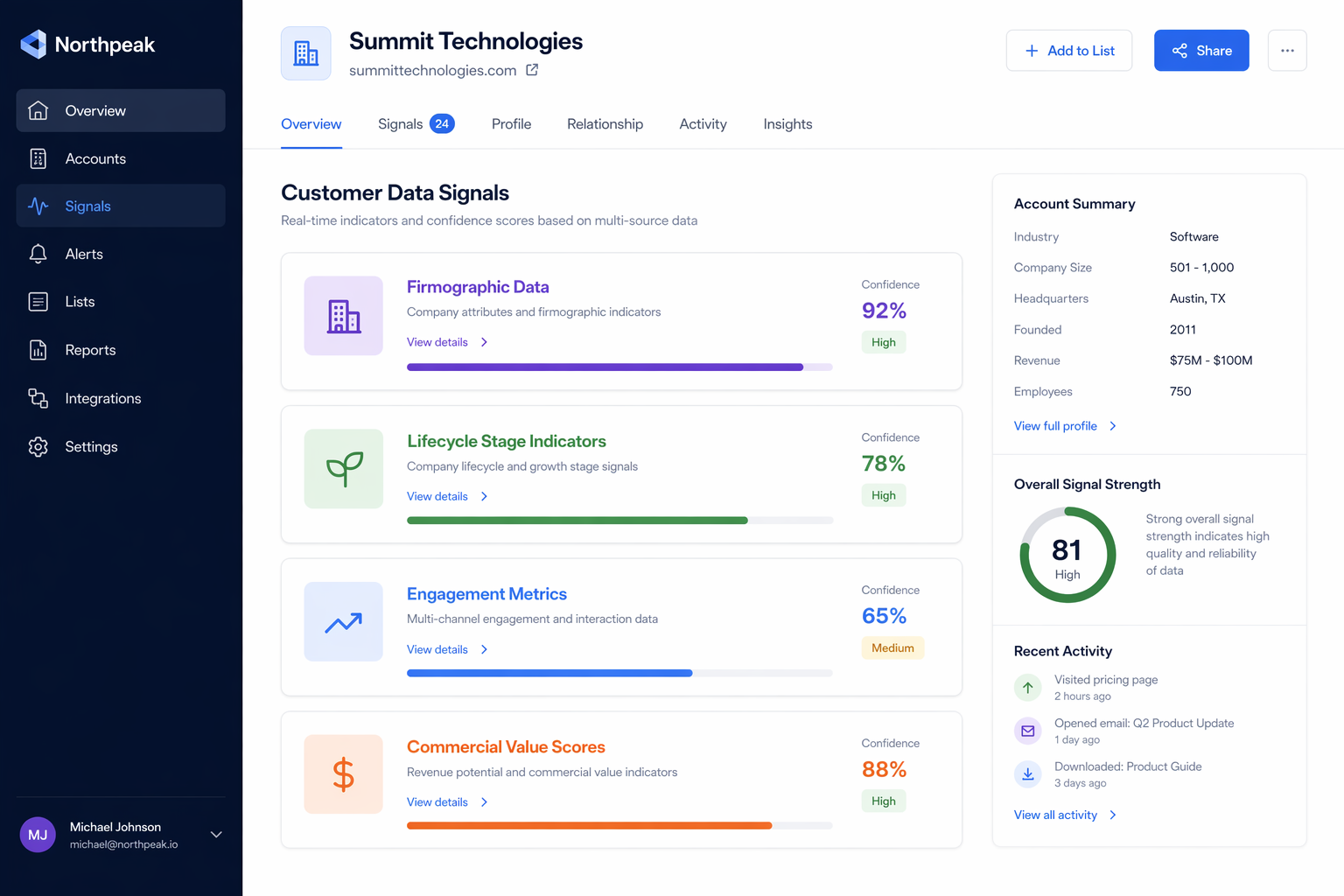
Strong segmentation combines signals such as:
- Firmographic fit: company size, sector, country, legal entity information, and market presence.
- Lifecycle stage: prospect, onboarding, active customer, expansion-ready account, renewal window, or at-risk relationship.
- Engagement quality: product usage, meeting history, support activity, event participation, and content interactions.
- Commercial potential: current revenue, expansion opportunity, contract timing, and strategic value.
- Confidence level: how complete, fresh, and verified the underlying data is.
When those signals are connected, the segment becomes more than a filter. It becomes a decision layer.
Enrichment Should Make Data More Trustworthy, Not Just Bigger
Adding more fields to a customer profile is easy. Adding the right fields is much harder.
Good enrichment improves trust. It helps teams understand whether a company is real, current, relevant, and worth prioritizing. That is why official and authoritative sources matter. Public business registries, tax ID validation services, partner systems, product entitlement records, and verified company data can all help clean up assumptions that would otherwise sit quietly inside the CRM.
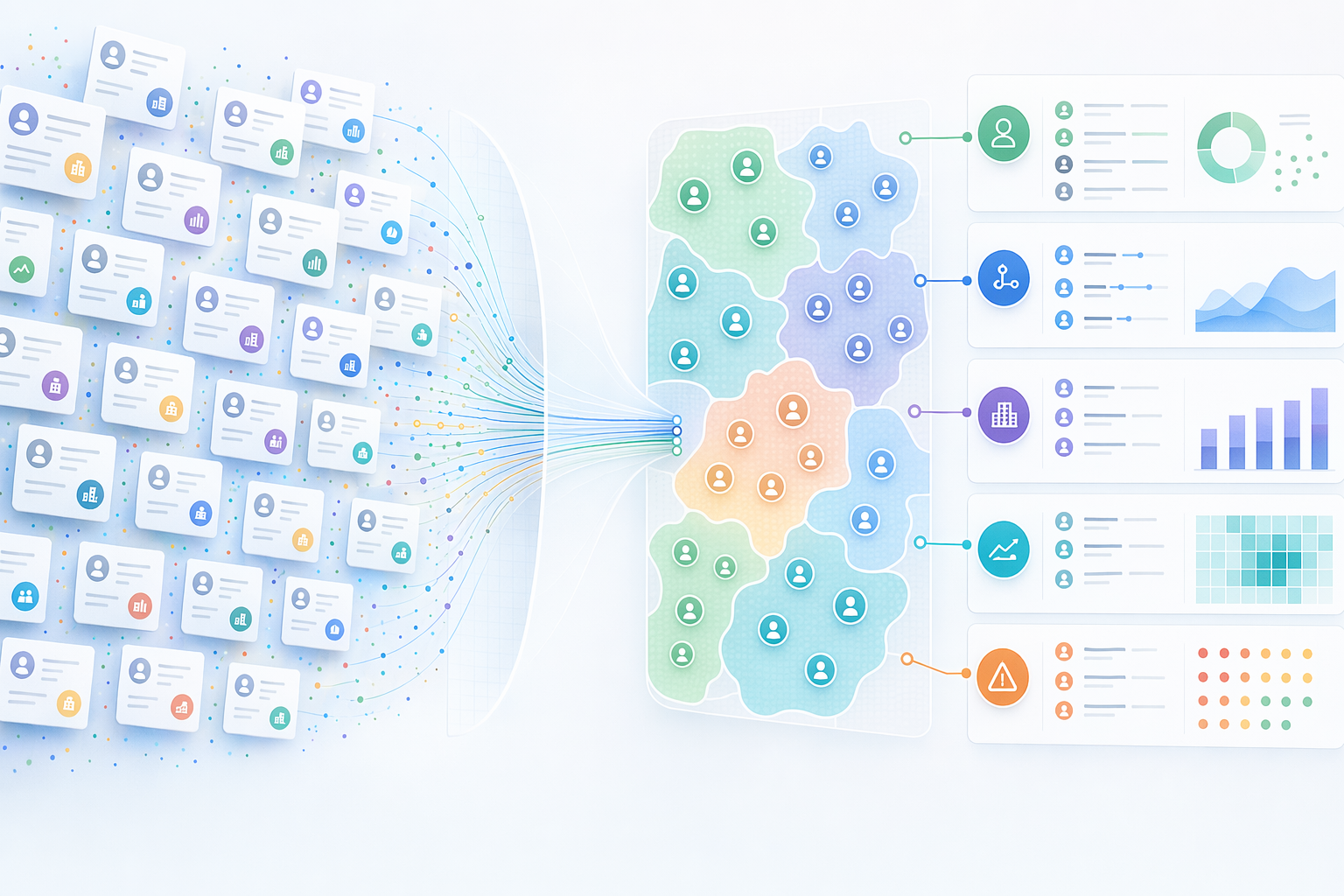
For example, an account may enter the system with a company name, email domain, and country. That is useful, but incomplete. With enrichment, the same record can become much more actionable:
- The company can be matched to a legal entity.
- Tax or business identifiers can be validated where available.
- Country and sector signals can be normalized.
- Related subsidiaries, branches, or buying groups can be recognized.
- Partner, license, or renewal context can be added from trusted systems.
Apivom services are designed around this idea: use data from official and operational sources to improve the quality of the customer profile, then make that profile useful inside the journey. Tools like Apivom's business lookup experience make verified company context easier to bring into everyday workflows, while Apivom integrations help connect the systems where customer signals already live.
The ICP Model Is the Bridge Between Insight and Action
An ideal customer profile is often treated like a marketing document. In practice, it should be an operating model.
An ICP model answers a simple question: which accounts deserve which type of attention, and why?
The answer should not rely on one score alone. A useful ICP model blends multiple dimensions: fit, timing, need, intent, relationship strength, and expansion potential. It also needs room for human judgment. Automation can surface the signal, but teams still need to decide how to act when the relationship is strategic or sensitive.
This is especially important in customer success. A high-fit customer with low engagement should not receive the same workflow as a low-fit customer with healthy usage. A large enterprise account approaching renewal should not be treated like a small new customer still learning the product. And a newly enriched company profile should not sit idle if it reveals that the account belongs to a priority sector.
When ICP logic is connected to customer journeys, teams can create more relevant motions:
- Onboarding paths based on segment maturity and expected use case.
- Expansion journeys for accounts that match the ICP and show strong adoption.
- Retention workflows for high-fit customers with early risk signals.
- Sales handoff rules when enrichment reveals a better opportunity than originally expected.
- Executive review queues for strategic accounts that deserve human attention before automation continues.
This is where Apivom Iris becomes valuable: it gives teams a place to manage customer lifecycle context, not just isolated records. Instead of asking people to interpret every signal manually, the system can organize data into segments that teams can actually use.
Automation Works Best When It Respects the Segment
Bad automation treats every account like a row in a spreadsheet. Good automation understands the account's context.
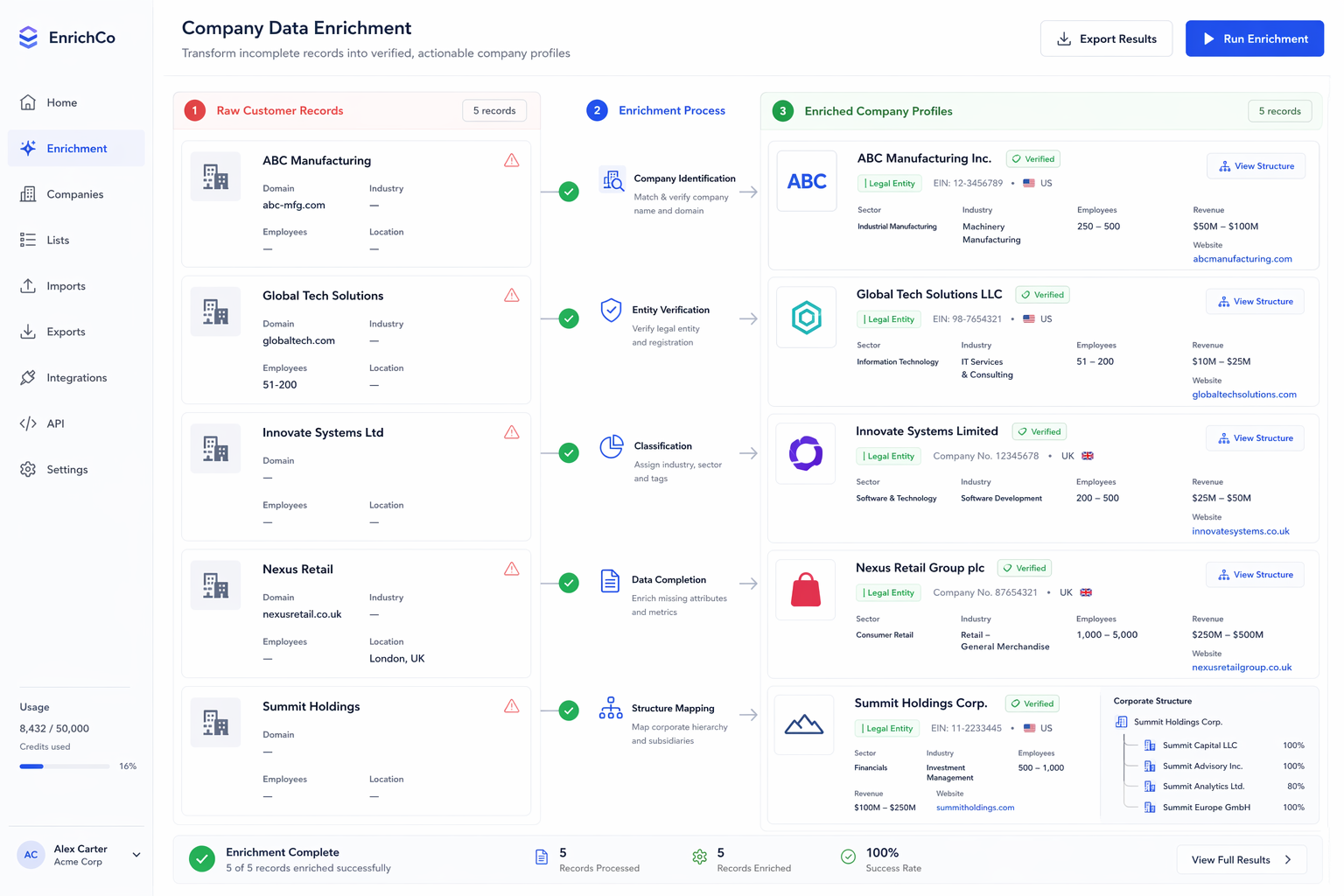
That context comes from segmentation and enrichment. If the system knows an account is high-fit, active, and approaching a renewal window, it can recommend a different next step than it would for a newly created lead with incomplete company data. If an official source confirms a company identity, automation can reduce friction in compliance checks. If enrichment shows that an account belongs to a target sector, it can trigger a more relevant onboarding or expansion journey.
The goal is not to automate every interaction. The goal is to automate the obvious work so people can focus on judgment, trust, and strategy.
Well-designed ICP-fit automation might include:
- Updating customer segments when official data changes.
- Routing high-fit accounts into priority lifecycle journeys.
- Notifying teams when enrichment reveals a stronger opportunity.
- Creating renewal preparation tasks before the account becomes urgent.
- Suppressing generic outreach when a customer needs a more personal touch.
This is also where Apivom solutions can help teams design repeatable journeys without turning the customer experience into a rigid script. The best automation feels timely and relevant because the segment behind it is accurate.

A Simple Framework for Getting Started
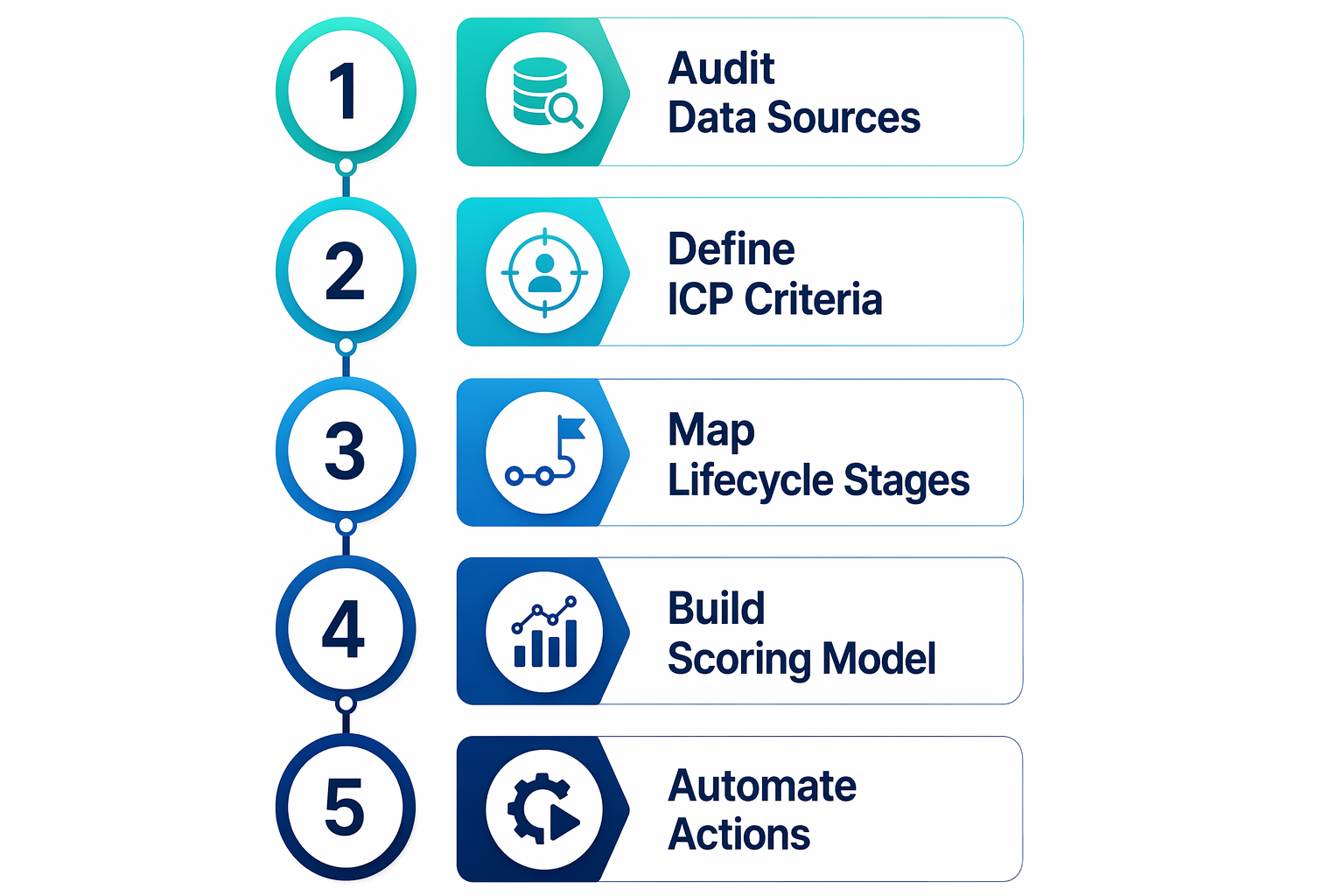
Teams do not need to rebuild their entire data operation before they can benefit from better segmentation. A practical starting point is to focus on a few high-value use cases.
1. Choose the decision you want to improve
Start with a business question, not a data model. For example: Which customers should receive proactive success attention this month? Which accounts are expansion-ready? Which leads match our ICP closely enough to prioritize?
2. Identify the minimum useful signals
Do not wait for a perfect profile. Define the smallest set of signals that can improve the decision: company type, sector, country, lifecycle stage, product usage, renewal timing, and verified business identity are often enough to begin.
3. Enrich only where it changes action
Enrichment has the most value when it changes what the team does next. If a field does not affect segmentation, prioritization, routing, or messaging, it may not need to be part of the first version.
4. Build automation around confidence
Some records will be complete and verified. Others will be partial. Automation should behave differently depending on confidence. A verified high-fit account can move into a priority journey; an uncertain record may need review before the system acts.
5. Review outcomes and adjust the model
ICP models should evolve. As teams learn which accounts renew, expand, churn, or require extra care, the segmentation model should become more precise. The point is not to create a frozen definition of the ideal customer. The point is to build a learning loop.
The Real Outcome: Less Noise, Better Timing
The promise of segmentation, enrichment, and ICP automation is not more dashboards. It is less noise.
When data is organized around fit and context, teams know where to spend time. When enrichment comes from official and trusted sources, records become more reliable. When automation respects the segment, customers receive journeys that match their real situation instead of generic sequences.
For growing B2B companies, that combination can change the operating rhythm. Sales teams prioritize better-fit opportunities. Customer success teams see risk and expansion signals earlier. Operations teams reduce manual cleanup. Leadership gets a clearer view of where revenue quality is improving.
Data alone does not create better customer journeys. Usable, enriched, well-segmented data does.
And once that foundation is in place, ICP-fit automation stops feeling like a technical project. It becomes a practical way to help every team focus on the customers where they can create the most value.